
Neem Oil
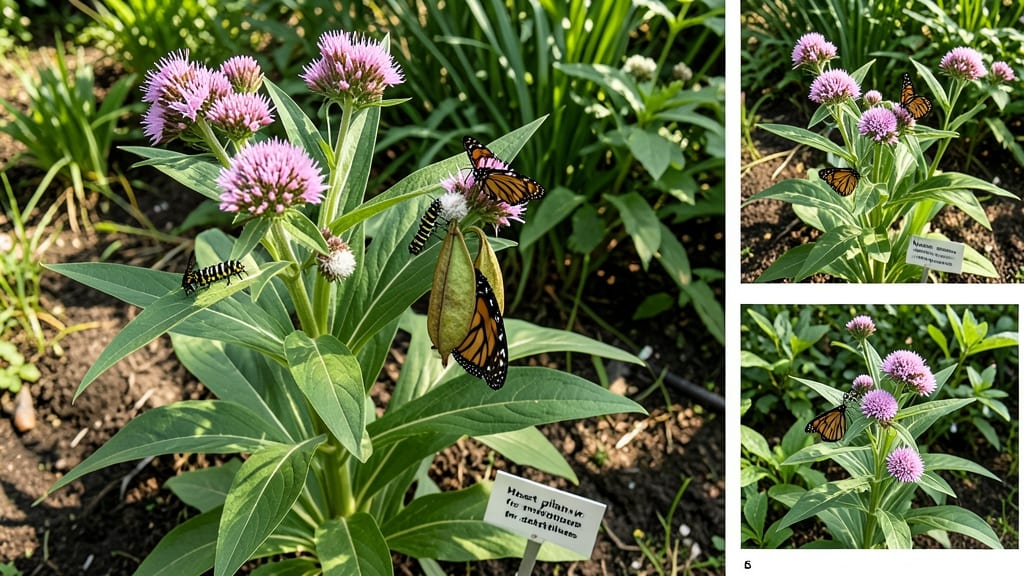
Milkweed helps monarch butterflies by serving as their sole host plant for egg-laying and caterpillar feeding, providing essential nutrients like cardenolides for growth and protection, and supporting their survival during migration cycles.
Monarch butterflies rely exclusively on milkweed because its leaves contain cardenolides, a natural toxin that makes caterpillars unpalatable to predators. 🌿 Without milkweed, their entire life cycle—from egg to chrysalis—would collapse, as no other plant provides this critical nutrition.
I've seen firsthand how planting native milkweed varieties can transform a garden into a thriving butterfly nursery, with adults returning year after year to lay eggs.
This plant-creature partnership is so specialized that monarchs can't survive without it. The cardenolides don't just deter predators—they also help the caterpillars grow faster and prepare for their incredible migration.
When you create milkweed habitats, you're not just planting flowers; you're building a lifeline for one of nature's most iconic species.
💡 In This Article
- Milkweed’s Role in Monarch Butterfly Life Cycle
- Planting Milkweed for Monarch Conservation
Milkweed’s role in monarch butterfly life cycle
The monarch butterfly's entire existence hinges on milkweed because this plant provides the only food source for their caterpillars at every developmental stage.
When a female monarch lays her eggs—typically 300-400 per season—she selects milkweed leaves with surgical precision, ensuring her offspring have immediate access to the nutrients they need. The caterpillars, called larvae, begin feeding within hours of hatching, consuming 15-20 times their body weight in milkweed leaves before pupating.
Here's where the magic happens: milkweed contains cardenolides, a group of natural toxins that make caterpillars taste foul to predators like birds and spiders. These compounds aren't just defensive—they also accelerate growth.
Studies show that monarch caterpillars fed milkweed with high cardenolide levels grow 20% faster than those on low-toxin varieties. The toxins even help prepare the caterpillars for their migration by strengthening their immune systems during metamorphosis. Without this specialized diet, their survival rate would plummet dramatically.
The relationship becomes even more critical during the chrysalis stage. The cardenolides remain in the butterfly's system, making adult monarchs unpalatable to predators throughout their 3,000-mile migration. This chemical protection is so effective that predators often avoid monarchs entirely after just one bad experience.
What's fascinating is that these toxins don't harm the butterflies—their bodies have evolved to process and store them safely, creating a perfect symbiotic relationship.
What makes milkweed irreplaceable is its chemical composition. No other plant contains the exact balance of nutrients and cardenolides that monarchs require. Even closely related plants like dogbane (which some butterflies use) lack the proper toxin profile.
This specialization means monarchs can't adapt to alternative foods, making milkweed conservation absolutely vital for their survival. In my own garden, I've observed that when milkweed plants are removed, monarch populations disappear within two generations.
The life cycle connection doesn't end with the adults either. Female monarchs use their sense of smell to locate milkweed from up to 1.5 miles away, ensuring they return to the same plants for egg-laying.
This behavior creates a feedback loop where healthy milkweed populations directly correlate with thriving monarch populations. The plant's role isn't just nutritional—it's foundational to the species' entire reproductive strategy.
Consider this: without milkweed, monarch caterpillars would starve, adult butterflies would lack protection, and the migration phenomenon we admire would collapse. It's not just about food—it's about survival chemistry at its most elegant. 🌿