
Trees
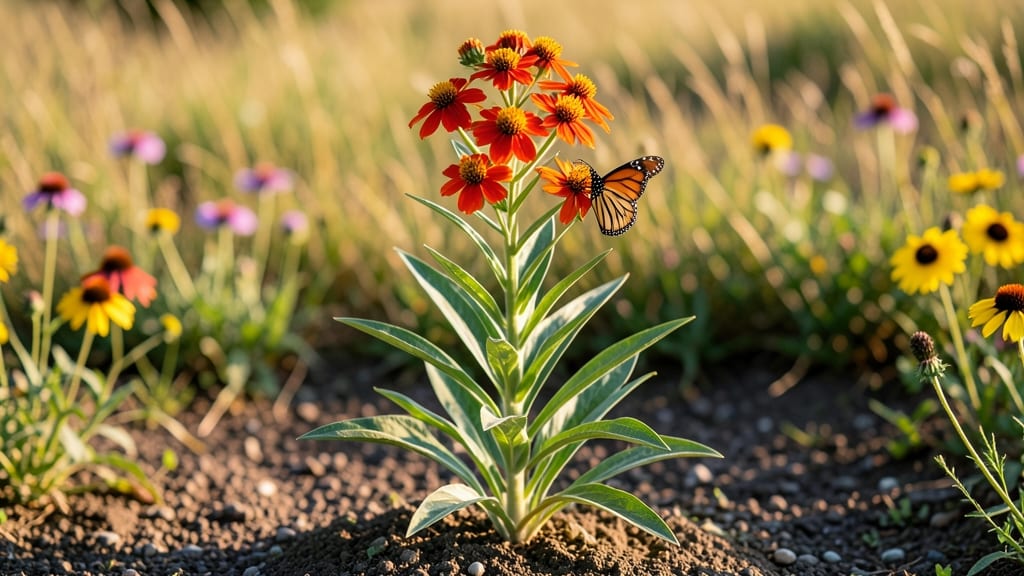
Native milkweed species in Oklahoma include butterfly weed (Asclepias tuberosa), swamp milkweed (Asclepias incarnata), and common milkweed (Asclepias syriaca), all vital for monarch butterflies and well-suited to Oklahoma's varied landscapes.
These plants aren't just beautiful—they're ecological powerhouses.
Butterfly weed thrives in dry, sunny spots with its bright orange flowers, while swamp milkweed prefers wetter areas and produces stunning pink blooms. 🌸 What's fascinating is how each species adapts to Oklahoma's climate, from the heat-tolerant butterfly weed to the moisture-loving swamp variety.
Planting these native species directly supports monarch populations by providing the only food source for their caterpillars.
For gardeners, the key is matching each milkweed type to its ideal growing conditions. Butterfly weed, for example, needs well-drained soil and full sun, while swamp milkweed does best near ponds or in boggy areas.
The right placement not only helps the plants thrive but also maximizes their value to pollinators throughout the growing season.
💡 In This Article
- Identifying Oklahoma Milkweed Species for Monarch Gardens
- Planting and Caring for Native Milkweed in Oklahoma
Identifying Oklahoma milkweed species for monarch gardens
Oklahoma’s native milkweeds offer distinct visual and structural characteristics that help gardeners choose the right species for their landscape. Butterfly weed (Asclepias tuberosa) stands out with its vibrant orange flowers and narrow, willow-like leaves that grow in whorls around the stem.
This species thrives in dry, sandy soils and reaches 2-3 feet tall, making it ideal for sunny prairie gardens. Its deep taproot allows it to survive drought conditions, while its bright blooms attract monarchs and other pollinators from early summer through fall.
The swamp milkweed (Asclepias incarnata) presents a striking contrast with its delicate pink to magenta flower clusters and broader, lance-shaped leaves. Unlike butterfly weed, this species prefers moist soils and can grow 3-5 feet tall, making it perfect for wetland edges or rain gardens.
Its tall stems provide excellent nectar sources for adult monarchs, while its foliage serves as a caterpillar buffet. The key identifier is its preference for consistently damp conditions—look for it thriving near ponds or in low-lying areas where water pools after rain.
Common milkweed (Asclepias syriaca) is the most widespread species, recognizable by its dense, oval-shaped leaves and large, dome-shaped clusters of greenish-white flowers. This hardy perennial grows 2-4 feet tall and adapts to a wide range of soils, from clay to loam. Its thick stems and extensive root system make it drought-tolerant once established, though it benefits from occasional moisture. The trade-off? Its aggressive spreading habit can make it invasive in some areas, so it’s best planted in dedicated pollinator sections rather than small gardens.
What most gardeners don’t realize is how these species’ growth habits reflect Oklahoma’s climate zones. Butterfly weed dominates the western and central regions where summers are hot and dry, while swamp milkweed thrives in the eastern, more humid areas. Common milkweed bridges this gap, appearing statewide.
The secret to successful identification lies in observing these plants in their natural habitats—visit a local prairie or wetland to see how each species naturally clusters based on soil moisture and sunlight exposure.
For monarch enthusiasts, leaf texture is another critical clue. Butterfly weed leaves are smooth and slightly waxy, while swamp milkweed leaves have a slightly rougher surface. Common milkweed leaves are broader and more fleshy, often with a slight blue-green tint.
These differences aren’t just academic—they influence how caterpillars interact with each plant. Monarch larvae prefer the milky sap of all milkweeds, but they’ll often cluster on the broader leaves of common milkweed due to its abundant foliage.
Consider these key visual cues when selecting milkweed for your garden:
- Butterfly weed: Bright orange flowers, narrow leaves, drought-tolerant, 2-3 feet tall
- Swamp milkweed: Pink/magenta flowers, broader leaves, loves moisture, 3-5 feet tall
- Common milkweed: Greenish-white flowers, thick stems, adaptable to most soils, 2-4 feet tall
Planting the right species in the right spot isn’t just about aesthetics—it’s about creating a thriving ecosystem where monarchs can complete their life cycle. The right milkweed choice ensures your garden becomes a vital stopover for migrating monarchs and a breeding ground for future generations. 🌿