
Pests
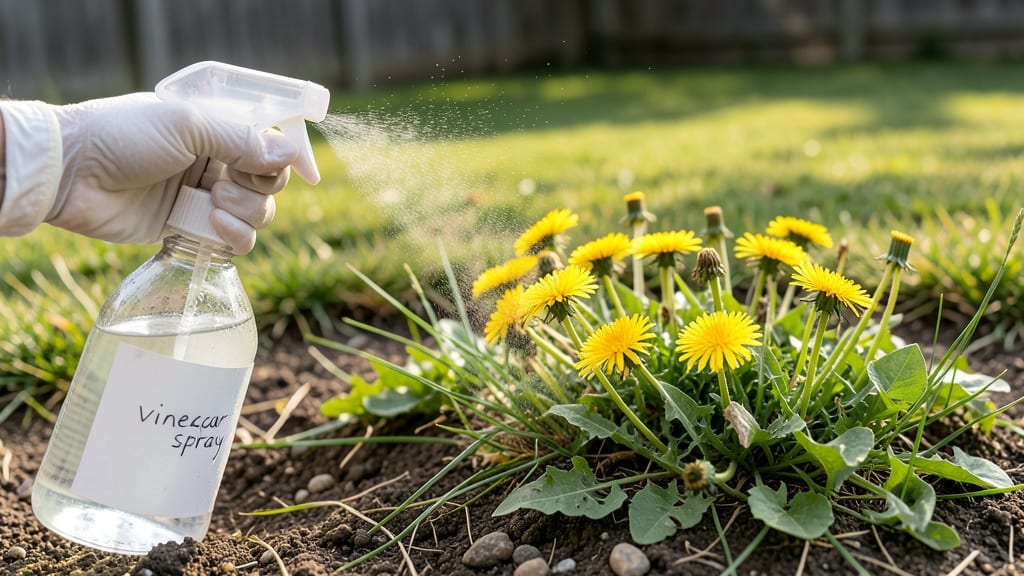
White vinegar weed killer disrupts unwanted plant growth by breaking down cellular structures through acetic acid, but its effectiveness varies by concentration (5%–20%) and application method. For tough weeds, use full-strength vinegar, while mixing with dish soap improves coverage—always avoid spraying near desirable plants or grass.
This natural herbicide works because its acetic acid lowers the pH around weed roots, causing dehydration and death within 24–48 hours. 🔥 The higher the vinegar concentration, the faster the results, but 5% vinegar (common household type) still kills most weeds—just requires reapplication.
I’ve found that adding a few drops of dish soap helps the solution cling better to broadleaf weeds, while a 1:1 vinegar-water mix is gentler on soil microbes. Always test a small area first, especially near perennials or vegetables.
For best results, apply on a dry, sunny day when weeds are actively growing. Cover the area completely to prevent regrowth, and repeat treatments every 3–5 days for stubborn weeds like dandelions.
Just remember: vinegar won’t break down in soil, so it’s best for spot treatment rather than large garden areas.
💡 In This Article
- How White Vinegar Kills Weeds: Science and Concentration Breakdown
- Safe Application Guide: Targeted Weed Control Without Harming Desired Plants
How white vinegar kills weeds: science and concentration breakdown
White vinegar’s weed-killing power comes from its main ingredient: acetic acid, which ranges from 5% to 20% concentration in commercial products. When sprayed on weeds, this acid penetrates leaves and stems, disrupting cellular membranes and causing rapid dehydration.
The pH drops dramatically—from around 7 (neutral) in healthy plants to 2-3 (highly acidic)—which denatures proteins and halts photosynthesis within minutes. 🔥 At 20% concentration, this process happens almost instantly, while 5% vinegar (common household type) takes 24-48 hours to show visible effects.
The concentration directly impacts effectiveness. A 5% solution works for small weeds and annuals but requires multiple applications, while 10% vinegar kills most broadleaf weeds in 1-2 treatments.
For stubborn perennials like dandelions, 20% vinegar is ideal—it delivers near-instant results but must be used carefully to avoid damaging nearby plants. The higher the concentration, the faster the kill, but also the greater the risk to desirable vegetation and soil microbes.
Diluting vinegar with water (e.g., 1:1 ratio) reduces potency but makes it safer for edible gardens.
What most people don’t realize is how acetic acid affects weed roots differently than over-the-counter herbicides. Unlike synthetic chemicals that target specific growth hormones, vinegar’s broad-spectrum action disrupts all plant functions simultaneously. This is why it works so well on young weeds but struggles with thick, established roots.
For example, a 10% vinegar solution will kill crabgrass within 6 hours but may take 3-5 days to fully eradicate dandelions with deep taproots. The acid also breaks down organic matter in soil, which is why frequent use isn’t recommended for garden beds.
Temperature plays a surprising role in vinegar’s effectiveness. Applying it on days above 70°F enhances absorption through plant leaves, while cooler temperatures slow the process. This is why late afternoon applications often yield better results—warmer leaves allow the acetic acid to penetrate more efficiently.
However, avoid spraying in direct sunlight, as the heat can cause vinegar to evaporate before it works its magic. For best results, apply when weeds are actively growing (spring or early fall) and follow up with a light watering to help the solution spread to the roots. 💫
One common misconception is that all vinegar works the same way. Household white vinegar (5%) contains about 50 grams of acetic acid per liter, while concentrated agricultural vinegar (20%) has nearly 200 grams per liter.
The difference isn’t just about strength—it’s about how quickly the acid disrupts plant cellular structures. For comparison, a 10% vinegar solution delivers roughly 100 grams of acetic acid per liter, making it a balanced choice for most garden weeds without being overly harsh on surrounding plants.
For those concerned about soil health, vinegar’s impact is temporary. While it won’t permanently sterilize soil, repeated applications can reduce beneficial microbial activity.
To mitigate this, limit use to targeted areas and consider mixing vinegar with 1 tablespoon of dish soap per gallon—this improves adhesion to weed surfaces without harming soil structure.
The soap acts as a surfactant, helping the vinegar solution cling better to waxy leaves like those on chickweed or clover. 🌱