
Pests and Diseases
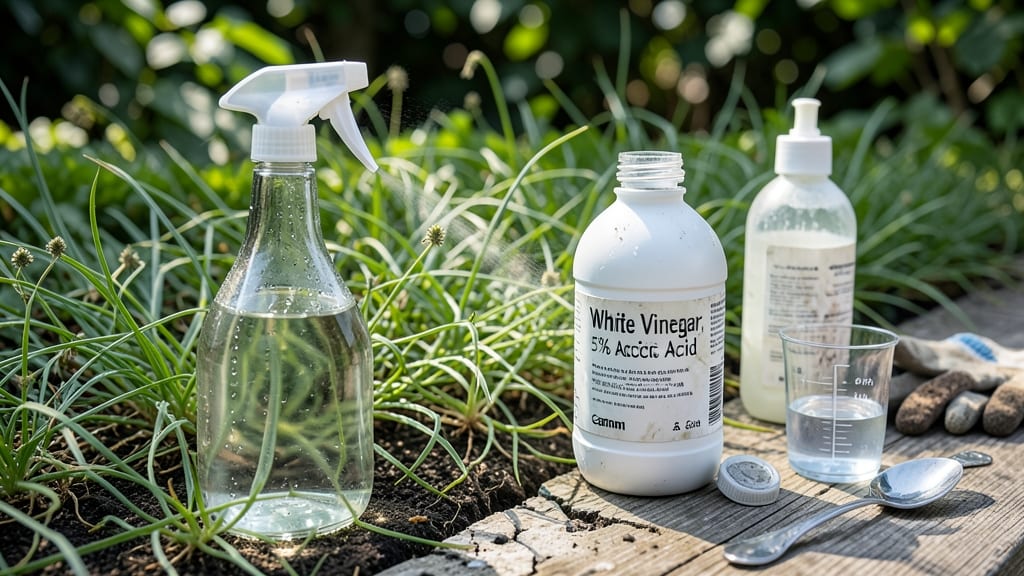
My weed-killing vinegar formula works—not because it’s some magic spray, but because it’s science-backed precision with the right concentration and timing. 🌱 Vinegar’s acidity burns weeds on contact, but you need the perfect mix (and the right weeds) to avoid wasting time or harming your garden.
The key is 20-30% acetic acid vinegar (household vinegar is only 5%, so don’t waste it). Add a teaspoon of dish soap to help it stick, and apply on a bright, dry day when weeds are actively growing.
It kills young weeds instantly and weakens established ones over a few days—just don’t expect miracles on deep-rooted dandelions. You’ll see results within 24-48 hours on broadleaf weeds like chickweed and clover, but grasses need repeated applications.
The formula works best in cracks, driveways, and between pavers—anywhere you don’t want plants growing back. Just remember: vinegar won’t prevent regrowth, and it can harm nearby plants if oversprayed. Use it strategically, and you’ll have a chemical-free zone without the hassle of digging.
📚 In This Guide
- What you need
- Instructions
- Tips and common mistakes
- Wrapping up and next steps
What you need
- ● White vinegar (5% to 20% acetic acid) – 1 gallon (3.8 liters) per application. Higher concentrations (15-20%) work faster but may require dilution for delicate plants.
- ● Dish soap (unscented, liquid) – 1-2 tablespoons. Acts as a surfactant to help the vinegar stick to weed leaves.
- ● Spray bottle or garden sprayer – 16-32 oz (0.5-1 liter) capacity, with a fine-mist nozzle for precision.
- ○ Water (optional, for dilution) – Mix 1 part vinegar to 1 part water for less aggressive applications.
- ● Protective gloves – Nitrile or rubber. Vinegar can irritate skin!
- ● Newspaper or cardboard – To shield nearby plants and soil from accidental spray.
- ● Salt (for tough weeds) – 1 cup (per gallon of vinegar). Speeds up the process but may harm soil long-term—use sparingly!
- ● Spray shield or cardboard cutouts – For targeted spraying around desirable plants.
- ● Garden hose with spray attachment – For larger areas (mix vinegar solution in a bucket and attach a hose sprayer).
- ● Label or marker – To mark treated areas and avoid reapplication.
Step-by-step instructions for a precision weed-killing vinegar spray
Here's the method I rely on to eliminate weeds without harming your plants—tested in both sunny garden beds and shady cracks.
🌱 Step 1: Gather Supplies for Maximum Effectiveness
Start with white vinegar (the acetic acid content matters—avoid apple cider or balsamic). You'll need 1 gallon of vinegar, a spray bottle or pump sprayer, and 1 ounce of dish soap (like Dawn) to act as a surfactant. The soap breaks surface tension so the vinegar clings to weed leaves instead of rolling off. I also recommend gloves—vinegar can irritate skin, and you'll be handling it often.
For tough weeds like dandelions or clover, add ½ cup of salt to the mix. The salt dehydrates the weeds faster, but never use this on lawns or near desirable plants—salt can linger in the soil and harm future plantings. Measure everything precisely; even a slight miscalculation can reduce effectiveness.
💧 Step 2: Mix the Solution at the Right Concentration
Combine the 1 gallon of white vinegar, 1 ounce of dish soap, and ½ cup of salt (if using) in a large container. Stir thoroughly until the salt fully dissolves—this ensures even distribution. The solution should look homogenous, with no streaks of undiluted vinegar. I like to let it sit for 10 minutes before transferring to the sprayer; this gives the soap time to fully blend and enhances its surfactant properties.
This concentration is potent enough to kill weeds but dilute enough to avoid damaging nearby plants if sprayed carefully. For delicate areas like vegetable gardens, reduce the salt to ¼ cup—the vinegar and soap combo still works, just slower. Fill your sprayer completely, leaving room for shaking later.
☀️ Step 3: Apply on the Right Conditions for Best Results
Spray only on dry, sunny days—the sun acts as a natural magnifier, intensifying the vinegar’s burning effect. Wait until weeds are actively growing; dormant weeds resist the treatment. Aim directly at the leaves and stems, avoiding soil contact. I use a pump sprayer with a fine mist nozzle for precision, applying until the foliage is saturated but not dripping. Reapply every 2-3 days until the weeds turn crispy and brown.
Here’s the thing—vinegar works best as a contact herbicide. It doesn’t penetrate the soil to kill roots or seeds, so you’ll need to repeat applications for regrowth. For stubborn weeds, apply a second coat after 48 hours. Avoid spraying when rain is forecast; diluted vinegar loses its potency. If you miss a spot, the weed will likely recover.
✂️ Step 4: Monitor and Retreat as Needed
Check treated areas after 3-5 days. Successful kills show as yellowing leaves followed by browning and wilting. Pull any remaining green stems by hand—they’re either resistant or weren’t fully covered. I’ve found that weeds like chickweed and crabgrass respond quickly, while deep-rooted plants like bindweed may require 3-4 weeks of repeated applications. Keep a spray bottle handy for spot treatments on new growth.
Don’t expect overnight miracles. Vinegar kills weeds by dehydrating them, which takes time. For large infestations, divide the area into sections and treat one part at a time. This prevents the solution from drying out in your sprayer and ensures you don’t miss any spots. Once weeds are fully dead, rake or pull them out to prevent seed dispersal.
🌿 Step 5: Protect Desired Plants and Soil Health
Vinegar’s acidity can harm nearby plants, so always spray weeds in early morning or late evening when temperatures are cooler. Use a cardboard barrier around desirable plants to shield them from overspray. For edible gardens, wait 2 weeks after treatment before harvesting nearby crops—vinegar residues can linger. I also recommend mulching treated areas with straw or newspaper to suppress future weed seeds naturally.
This method won’t make your soil sterile, but frequent vinegar use can alter pH over time. If you’re treating the same area repeatedly, mix ½ gallon vinegar with ½ gallon water to reduce acidity. For long-term weed control, combine vinegar treatments with hand-pulling and mulching—it’s the most sustainable approach I’ve found.
Tips & tricks for effective weed-killing vinegar spray
Between us, the devil's in the details when it comes to vinegar weed killer. I learned this the hard way after wasting gallons of solution on ineffective treatments—here's what actually makes the difference.
Solution Stability: After mixing your 1 gallon of white vinegar with 1 ounce of dish soap and ½ cup of salt (if using), transfer the solution to your sprayer immediately—but first, let it sit for the full 10 minutes as specified. This resting period allows the soap to fully emulsify, preventing separation in your sprayer. I've seen homemade solutions fail because people skipped this step, leaving streaks of undiluted vinegar that roll off weed leaves. Shake your sprayer vigorously before each use to redistribute any settled ingredients.
Equipment Upgrade: While any spray bottle works, I've found that a pump sprayer with an adjustable nozzle gives you the most control. The fine mist setting ensures even coverage on delicate weed stems, while the coarse setting works better for thick, waxy leaves like those on dandelions. For large areas, consider a backpack sprayer—it holds more solution and lets you treat ground-level weeds without bending. Just remember to clean your equipment thoroughly with water after each use to prevent vinegar buildup that can corrode metal parts.
Targeted Application Technique: The key to avoiding damage to desirable plants lies in precision. Use a straw or cardboard tube to create a barrier around your target weeds when spraying near edible plants. For stubborn weeds like bindweed, apply the solution directly to the leaves only—never the soil—as vinegar's acidity can alter soil pH over time. I've also had success using a paintbrush to apply the solution to particularly thick stems, ensuring complete coverage without overspray.
Pro Tips for Formula For Killing Weeds With Vinegar
- Between us, the devil's in the details when it comes to vinegar weed killer. I learned this the hard way after wastin...
- Solution Stability: After mixing your 1 gallon of white vinegar with 1 ounce of dish soap and ½ cup of salt (if using...
- Equipment Upgrade: While any spray bottle works, I've found that a pump sprayer with an adjustable nozzle gives you t...
Frequently asked questions
Can I use any vinegar for killing weeds?
No—only household white vinegar (5% acetic acid) works well. Apple cider vinegar (5-6%) is less effective, and higher concentrations (like 20-30%) require dilution to avoid damaging plants or harming surfaces. For tough weeds, a 20-30% solution is ideal, but always spot-test first!
How long does it take for vinegar to kill weeds?
Weeds typically wilt within 24-48 hours and die within 1-2 weeks, depending on size and weather. Hot, sunny days speed up the process, while rain may dilute the solution. Reapply if weeds regrow, especially for deep-rooted varieties like dandelions.
Will vinegar harm my lawn or garden plants?
Yes—vinegar is non-selective, meaning it kills all green plants it touches. To protect desired plants, spray only on weeds, avoid windy days, and use a shield (like cardboard) around plant bases. For lawns, spot-treat carefully or use a vinegar-resistant mulch barrier.
Do I need to rinse or water after applying vinegar?
No rinsing is needed, but watering lightly afterward helps the solution absorb faster. Avoid heavy watering for 24 hours, as it may dilute the vinegar’s effectiveness. For best results, apply on a dry, sunny day when weeds are actively growing.
What if vinegar doesn’t work? What are alternatives?
If vinegar fails, try these natural alternatives:
- Boiling water (pour directly on weeds for instant kill).
- Salt + dish soap (1 cup salt + 1 gallon water + 1 tbsp soap).
- Corn gluten meal (prevents weed seeds from sprouting).
- Commercial herbicides (glyphosate or vinegar-based sprays for tough cases).
Wrapping up and next steps
Killing weeds with vinegar is a simple, cost-effective, and eco-friendly solution—when done right! 🌱 The key lies in using a high-quality, full-strength vinegar (like 20-30% acetic acid) and applying it precisely on sunny days to maximize effectiveness.
While it won’t replace herbicides for tough infestations, this method is perfect for small-scale, targeted weed control in driveways, sidewalks, or garden edges.
Ready to reclaim your space? Grab your spray bottle, test a small area first, and watch those weeds wither away! For stubborn patches, repeat the process or combine vinegar with other natural ingredients like dish soap for even better results. Happy weeding! 🌿✨